
Hilton Head Island
Legacy plantation clubs anchor the island's country-club-driven real estate economy. Membership value and property value move together here, which makes reporting a governance matter as much as a finance one.
The South Carolina Lowcountry
Senior fractional CFO leadership across Hilton Head, Bluffton, Kiawah, Myrtle Beach, and Charleston, on the season that matters most.
A fractional CFO in Hilton Head works a calendar rather than a straight line. Lowcountry hospitality and club revenue swing meaningfully by season, and the gap between a strong spring and a quiet September is wide enough that a rear-view monthly close tells a board very little about what is coming. Recent occupancy softening in parts of the market — even as full-service resorts held firm — is precisely the kind of signal that shows up in a forecast months before it shows up in a variance report.
Leadership transitions at several marquee resorts make this a natural moment to review and strengthen finance structure. New general managers and new boards inherit reporting they did not design, and the first year is when allocation, reserve funding and seasonal cash discipline are easiest to reset. We work here as the senior finance partner through exactly that window.
"Coastal clubs live and die by the season — the right CFO reads the shoulder-season numbers before the board has to ask why."
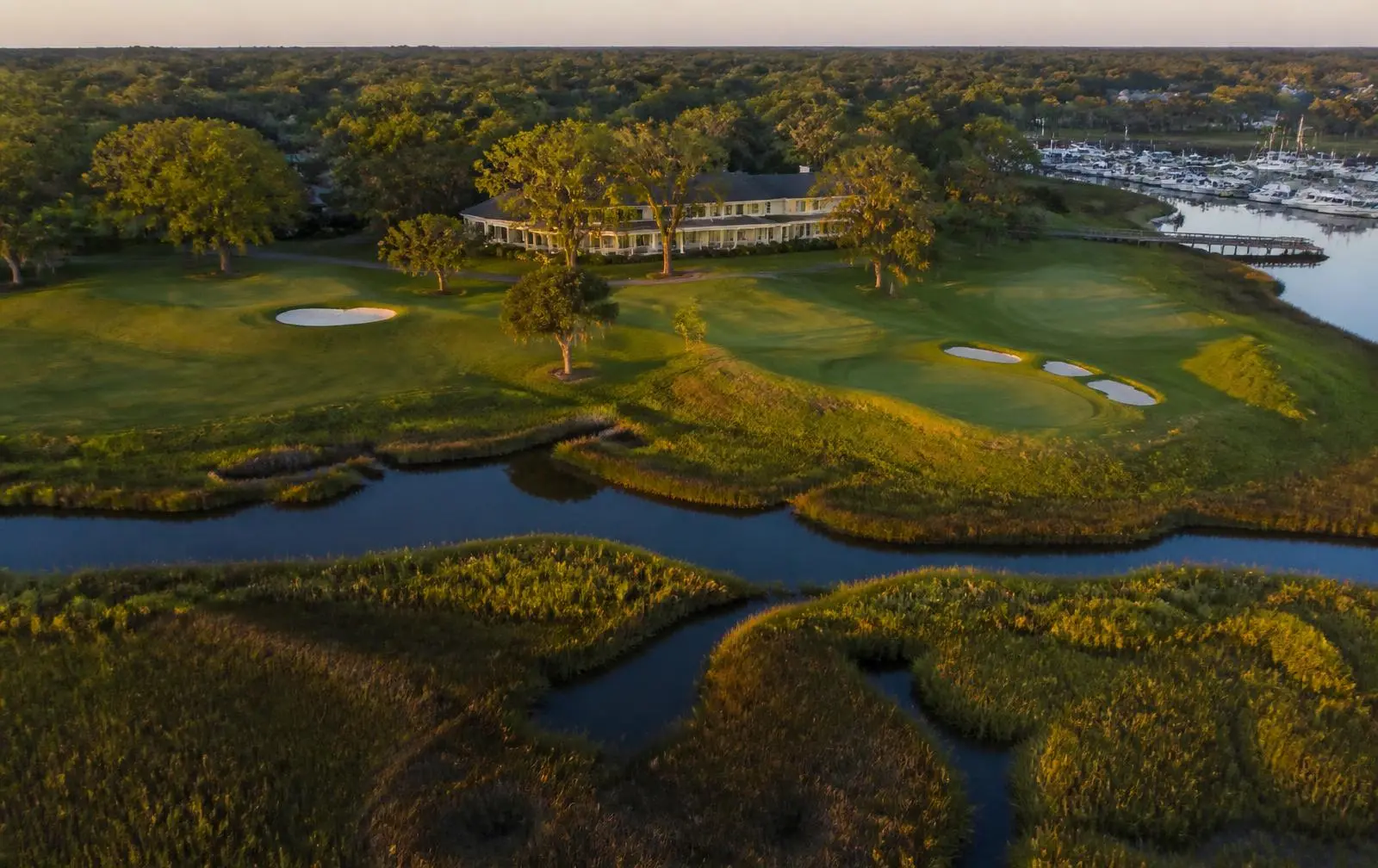
"The season sets the revenue. The finance function decides what survives the off-season."
Legacy plantation clubs anchor the island's country-club-driven real estate economy. Membership value and property value move together here, which makes reporting a governance matter as much as a finance one.
The fastest-growing private club cluster in the Lowcountry, largely Fazio- and Nicklaus-designed. Growth-stage clubs here are still building the reserve and reporting habits that older island clubs already rely on.
An ultra-high-end resort and residential club market, with a new private course planned nearby. Blended resort and member economics at that tier demand allocation discipline few small teams have time to maintain.
A public/private hybrid golf-tourism economy that has seen more than a decade of consolidation. Rounds-driven revenue and multi-property ownership put the emphasis on daily-fee yield and consolidated reporting.
Boutique hospitality and private social clubs serving the historic downtown and surrounding golf communities. Independent operators here compete on experience, so margin visibility matters more than scale.
Serving clients beyond the Lowcountry? See our Pinehurst-Charlotte corridor and our South Florida footprint.
5,411
Country clubs in the United States
Concentrated in the South, with Florida leading at about 459 — roughly 8.5% of the national total.
~40%
Average capital reserve underfunding
Even as roughly 60% of private clubs raise capital expenditure budgets.
50–55%
Share of a club operating budget
Typically consumed by payroll and benefits, before a single capital dollar is committed.
A monthly packet a board can read in ten minutes, with written commentary and a general manager who is never surprised by it.
Budgets built from operating reality, dues scenarios modeled before they reach the membership, and forecasts that get revisited rather than filed.
Reserve studies converted into funded multi-year plans, with project sequencing and debt service modeled against actual cash.
Prime cost, labor productivity and outlet-level contribution tracked closely enough to act on mid-month rather than mid-year.
Clean schedules, documented controls and 501(c)(7) discipline that hold up under an auditor's or an examiner's questions.
Senior financial judgment beside the general manager and the owner, without the cost or permanence of a full-time hire.
Boards on Hilton Head and in Bluffton rarely open with the phrase “fractional CFO”. They ask for an outsourced CFO, a part-time CFO, or simply someone senior to sit with the finance committee. The arrangement is the same one.
Owners and boards describe what they are looking for in several ways: fractional CFO, outsourced CFO services, part-time CFO, virtual CFO, interim CFO, or simply CFO consulting and advisory services. In practice they are asking for the same thing: a chief financial officer's judgment on a defined cadence, without a full-time chief financial officer's salary.
The one meaningful distinction is duration. An interim CFO fills a vacant seat temporarily until it is filled permanently. A fractional or part-time CFO is a permanent arrangement at partial capacity — the ongoing model most Lowcountry clubs, hospitality groups and owner-led businesses in our practice choose, because the need is continuous even when the hours are not.
In practice, yes. Fractional, outsourced, part-time and virtual CFO all describe CFO-level judgment delivered on a defined cadence rather than as a full-time hire. Interim CFO is the one real distinction, because it is temporary cover for a vacant seat. Most Lowcountry club and resort engagements are ongoing rather than interim.
The coast is covered as one market, and engagements are run remotely on the board and finance committee cadence, including the front end of the season. In-person attendance for key board, budget or capital reviews can be arranged on request.
Seasonality is modeled explicitly rather than averaged away. That means a rolling cash forecast by month, shoulder-season stress cases, and payroll and inventory plans that flex with occupancy instead of trailing it.
It is a core part of the practice. Blended models need clean allocation between resort and member activity, defensible departmental margins, and reporting that lets a board or owner see each side of the business on its own terms.
The controller keeps the ledger and the general manager keeps operations. The CFO sits above both on forecasting, capital planning, dues and initiation modeling, lender relationships and board reporting. The roles are complementary rather than overlapping.
For the model itself, see what a fractional CFO actually does and our private club CFO practice. Clubs planning a capital program should start with reserve studies and capital planning before revisiting board financial reporting.
Tell us how your organization is governed, how your season actually behaves, and what your reporting looks like between the peaks. If a fractional engagement is the right fit we will say so — and if it is not, we will tell you what we would suggest instead.
Schedule a Conversation