New Jersey & the Tri-State Corridor

A fractional CFO practice built for New Jersey's century-old private clubs.

Senior fractional CFO leadership across Bergen County, the Somerset Hills, Greenwich, Westchester, and the Jersey Shore — on-site where the board meets.

Why local matters

This corridor rewards the CFO who understands generational governance.

A fractional CFO in New Jersey works in the densest concentration of private-only golf clubs in the country. Many of these institutions are member-owned and generational — families joining across three or four generations, waitlists that can outlast a member's own patience, and governance structures written long before modern financial reporting existed. The result is a finance function carrying institutional weight on documentation that was never designed for it.

The corridor has also seen what happens when the books are not airtight. When a club's finances or ownership become a matter of public dispute, the conversation leaves the boardroom and enters the town — and no board recovers that ground quickly. We work here as the senior, discreet finance partner those boards need: on-site for meetings, candid in private, and quiet everywhere else.

"When a club's waitlist outlives its own members' patience, the finance function has to be airtight — because everyone from the board to the town is watching the books."
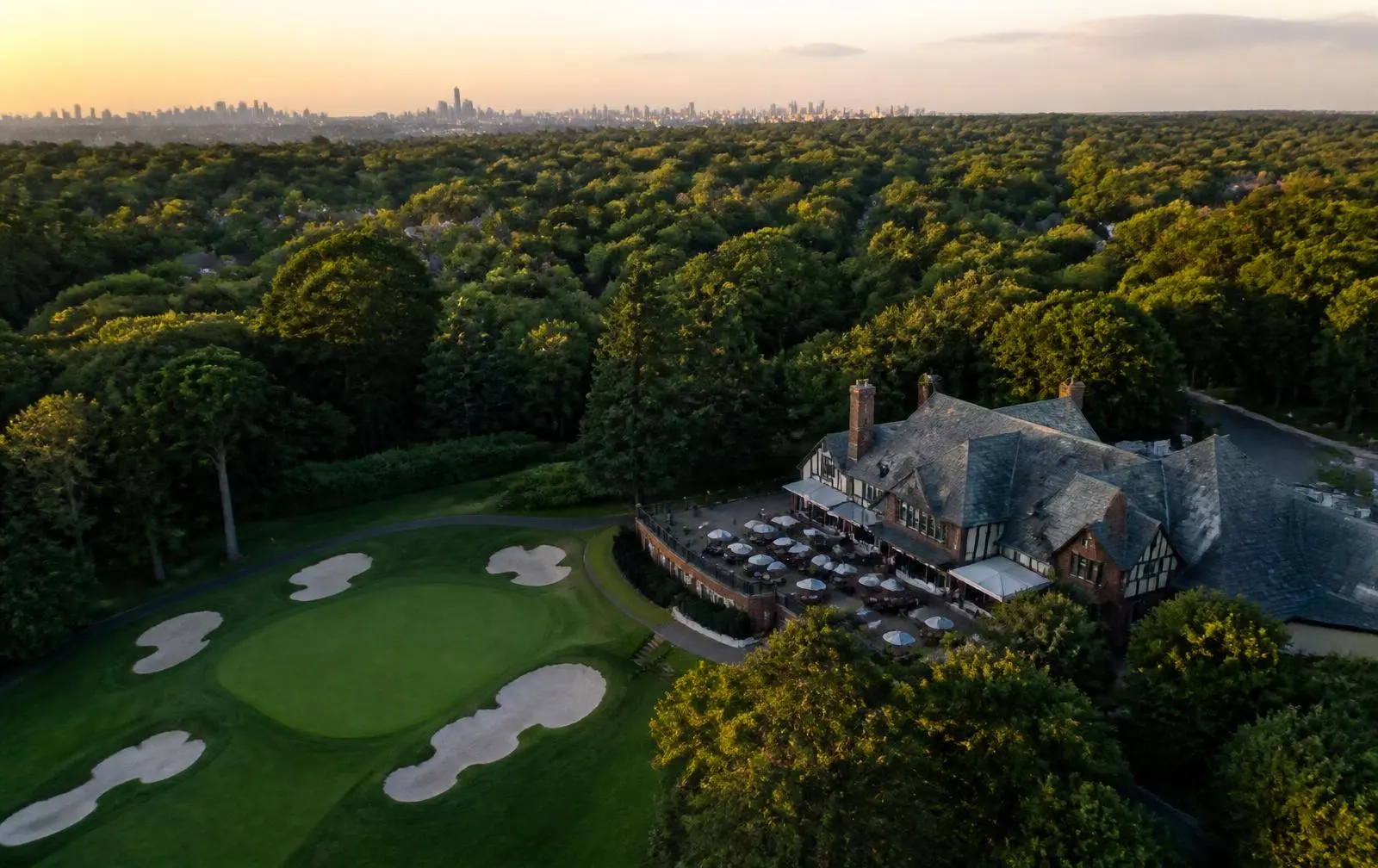
Aerial view of a century-old private country club in northern New Jersey at golden hour, with the Manhattan skyline on the horizon.

"An institution a hundred years old is still judged on the packet it produced last month."

Where we serve

Across the tri-state private club corridor.

Bergen County corridor

Tenafly, Alpine, Paramus and Ridgewood host a dense cluster of century-old member-owned clubs minutes from the George Washington Bridge. Proximity to Manhattan shapes both the membership base and the expectations placed on the finance function.

Essex County & the Somerset Hills

Historic clubs serving generational New York-metro wealth, several of them older than the reporting standards they now operate under. Boards here weigh preservation against modernization in nearly every capital conversation.

Greenwich, CT

Legacy private country clubs with waitlists still exceeding a year and initiation fees rumored near six figures. That kind of demand puts real money on the balance sheet long before a member ever plays.

Westchester County (Rye, Armonk, Harrison)

A mix of legacy clubs and newer residential-club development competing for the same households. Comparison between the two is now a standing item in most finance committee discussions.

Jersey Shore clubs (Rumson, Deal, Spring Lake)

A seasonal-hospitality-driven membership base tied to summer coastal wealth. Revenue arrives in a narrow window while payroll, grounds and insurance run all twelve months.

Serving clients beyond the tri-state corridor? See our South Florida footprint and our Naples and Gulf Coast practice.

Sectors we serve in New Jersey

Senior CFO leadership, scoped to the businesses that define this market.

National context

5,411

Country clubs in the United States

Concentrated in the South, with Florida leading at about 459 — roughly 8.5% of the national total.

~40%

Average capital reserve underfunding

Even as roughly 60% of private clubs raise capital expenditure budgets.

50–55%

Share of a club operating budget

Typically consumed by payroll and benefits, before a single capital dollar is committed.

Why fractional, here

Senior judgment, on your cadence — and in your zip code.

  • Fluent in generational, legacy club governance and multi-generational board dynamics
  • Experience modernizing manual, paper-based reporting common in century-old institutions
  • Comfortable working alongside long-tenured GMs, controllers, and finance committees
  • The discretion high-net-worth, low-visibility clients expect
  • A boutique relationship — you work with the senior CFO, not a delegated junior

What we do

Board-grade reporting & GM partnership

A monthly packet a board can read in ten minutes, with written commentary and a general manager who is never surprised by it.

Operating budgets, dues modeling & forecasts

Budgets built from operating reality, dues scenarios modeled before they reach the membership, and forecasts that get revisited rather than filed.

Capital reserves, assessments & project finance

Reserve studies converted into funded multi-year plans, with project sequencing and debt service modeled against actual cash.

Member dues, F&B and payroll discipline

Prime cost, labor productivity and outlet-level contribution tracked closely enough to act on mid-month rather than mid-year.

Audit readiness, IRS exemption & controls

Clean schedules, documented controls and 501(c)(7) discipline that hold up under an auditor's or an examiner's questions.

Behind-the-scenes finance leadership

Senior financial judgment beside the general manager and the owner, without the cost or permanence of a full-time hire.

Fractional CFO, outsourced CFO, part-time CFO

Different words, one role — and one seat at your table.

Boards in Bergen County and Greenwich rarely open with the phrase “fractional CFO”. They ask for an outsourced CFO, a part-time CFO, or simply someone senior to sit with the finance committee. The arrangement is the same one.

Owners and boards describe what they are looking for in several ways: fractional CFO, outsourced CFO services, part-time CFO, virtual CFO, interim CFO, or simply CFO consulting and advisory services. In practice they are asking for the same thing: a chief financial officer's judgment on a defined cadence, without a full-time chief financial officer's salary.

The one meaningful distinction is duration. An interim CFO fills a vacant seat temporarily until it is filled permanently. A fractional or part-time CFO is a permanent arrangement at partial capacity — the ongoing model most tri-state clubs, hospitality groups and owner-led businesses in our practice choose, because the need is continuous even when the hours are not.

Common questions

What boards and owners here ask first.

Is an outsourced or part-time CFO the same as a fractional CFO?

In practice, yes. Fractional, outsourced, part-time and virtual CFO all describe CFO-level judgment delivered on a defined cadence rather than as a full-time hire. Interim CFO is the one real distinction, because it is temporary cover for a vacant seat. Most tri-state club and family-office engagements are ongoing rather than interim.

Do you attend board and finance committee meetings in person?

Yes. Engagements across Bergen County, Essex County, Greenwich and Westchester are structured around the board calendar, with on-site presence for board and finance committee meetings and remote work between them.

Our club has run on paper reports for decades. Is that a problem?

It is common in century-old institutions and it is workable. The first phase of most engagements here is quietly modernizing the reporting itself — a monthly packet with written commentary, reconciled schedules and forward-looking cash — without disrupting the people who have kept the books for years.

How does a fractional CFO work alongside a long-tenured controller or GM?

The controller keeps ownership of the ledger and the general manager keeps ownership of operations. The CFO sits above both on forecasting, capital planning, dues and initiation modeling, lender relationships and board reporting. The roles are complementary rather than overlapping.

How discreet is the engagement?

Discretion is a condition of the work. Client names, financials and board discussions are never used as marketing, and reporting is built so that sensitive figures stay inside the room where they belong.

For the model itself, see what a fractional CFO actually does and our private club CFO practice. Boards weighing a hire against the alternatives should read club CFO alternatives, and any club holding an unmodeled study should start with reserve studies and capital planning before revisiting board financial reporting.

Start the conversation

A quiet, candid first conversation — in Bergen County, Greenwich, or Westchester.

Tell us how your institution is governed, what your reporting looks like today, and which decisions are queued behind it. If a fractional engagement is the right fit we will say so — and if it is not, we will tell you what we would suggest instead.

Schedule a Conversation